How to Spot an Ethical Breeder: Finding Your Perfect (and Healthy) Match
Choosing a new furry family member is one of the most exciting decisions you’ll ever make. Whether you’re looking for a bouncy Labrador or a sophisticated Persian cat, the person you choose to buy from matters just as much as the pet itself.
At Pet Pro Search, we believe in "quality connections," and that starts the moment a pet is born. Finding an ethical breeder isn't just about getting a "purebred" animal; it’s about ensuring your future companion has been given the best start in life: socially, physically, and genetically.
Unfortunately, the search can be a bit of a "ruff" road. Between puppy mills and "backyard breeders," it’s easy to get sniffed into a bad situation. To help you navigate, we’ve put together the ultimate guide to spotting an ethical breeder who prioritizes the health of their animals over the weight of their wallets.
1. Meeting the Family Tree: Why Seeing the Parents is Non-Negotiable
You’ve seen the photos on the website, and they are adorable. But before you fall head-over-heels, you need to see where those babies came from.
An ethical breeder will almost always insist that you meet the mother (the "dam"). The father (the "sire") might not always be on-site: many breeders use high-quality males from other kennels to ensure genetic diversity: but the mother should be present and healthy.
What to look for:
- Temperament: Is the mother calm, friendly, or appropriately shy? If she is overly aggressive or terrified, there’s a high chance those traits (or the environment that caused them) have been passed to the litter.
- Physical Condition: She should look well-fed and well-cared for. While nursing can take a toll on a dog’s coat, she shouldn’t look neglected or exhausted.
- Interaction: Watch how she interacts with her puppies. A good mom is a sign of a good start.

2. Decoding the "Rare" Language: Red Flags in Marketing
In the world of ethical breeding, "rare" is usually a four-letter word. If you see a breeder upselling a puppy because of a "rare color," "mega-coat," or "micro-size," your "Ick Factor" alarm should be going off.
In many breeds, these "rare" features are actually what ethical breeders call "culls": traits that fall outside the official breed standard and might even indicate health issues. For example:
- "Rare Colors": Often indicate a hidden mixed breed or a genetic mutation that can lead to deafness or skin issues (like the "merle" gene in certain breeds when not bred responsibly).
- "Mega-Coats": Might look cute, but if it’s not standard for the breed, it can lead to severe matting and skin infections.
- "Teacup" or "Micro": Intentionally breeding for extreme smallness often leads to heart defects, fragile bones, and a significantly shortened lifespan.
An ethical breeder prices their pets based on the quality of their health, structure, and temperament: not because they have a "unique" coat color that doesn't belong in the breed.
3. The Science of Health: Beyond the "Vet Check"
Every breeder will tell you their puppies have been "vet checked." But for an ethical breeder, a simple exam isn't enough. They invest in deep-dive health testing for the parents before they ever decide to have a litter.
The "Big One": Hip Dysplasia
For many medium and large breeds, hip dysplasia is a serious concern. Ethical breeders will have their dogs’ hips evaluated by organizations like the OFA (Orthopedic Foundation for Animals) or PennHIP. They should be able to show you official certificates: not just a note from a local vet: grading the hips as "Fair," "Good," or "Excellent."
Vaccinations and Records
Your puppy should come with a "passport" of their own. This folder should include:
- Completed Vaccinations: Usually the first round of distemper and parvovirus.
- Deworming Schedule: Evidence that they have been treated for common parasites.
- Microchip Info: Most ethical breeders microchip their pups before they leave.
If you have questions about what these tests mean, it's always a great idea to consult with a professional. You can find highly-rated Veterinarians through our network to help you review a breeder's health claims.

4. Check the "Chassis": Structure and Breed Standards
It might sound technical, but knowing the "standard" of your chosen breed can save you a lifetime of vet bills.
Square vs. Rectangular
Is your breed supposed to be "square" (like a Boxer or Poodle) or "rectangular" (like a Dachshund or Corgi)?
- The Danger: Dogs that are bred to be "longer" than their standard often suffer from severe back problems and IVDD (Intervertebral Disc Disease).
- Poor Breeding: Even in "rectangular" breeds, an unethical breeder might exaggerate these features for "the look," leading to a dog that can barely walk comfortably by age five.
The Front Legs (Bowing)
When you meet your potential pet, look at their front legs. They should be straight and sturdy. If you see "bowing" (legs curving outward), it could be a sign of:
- Genetic Orthopedic Issues: An inherited structural flaw.
- Nutritional Deficiencies: The breeder isn't feeding high-quality food, leading to poor bone development.
Either way, bowed legs are a warning sign of future joint pain and mobility issues.

5. The "Concierge" Experience: Why They Should Interview YOU
An ethical breeder doesn't just want your money; they want a "furever" home for their baby. Expect them to be a bit nosy! They might ask about:
- Your Fence Height: Is it safe for a high-jumping breed?
- Your Activity Level: A high-energy Border Collie shouldn't go to a couch-potato household.
- Your Experience: Have you handled this specific breed before?
Energy Matching
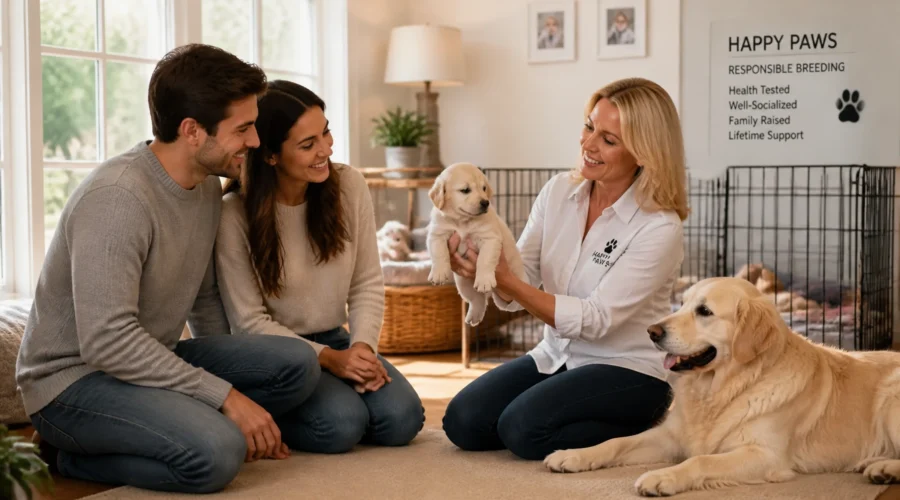
Excellent breeders don't just let you pick the "cutest" one. They spend eight weeks watching the puppies' personalities develop. They will match the "bold" puppy with an active family and the "mellow" puppy with a quieter household. Trust their expertise: they want the match to work as much as you do!
The Safety Net (Right of First Refusal)
This is the hallmark of an ethical breeder. Their contract will state that if, for any reason, you can no longer keep the pet, it must go back to them. They take lifetime responsibility for every animal they bring into the world. They will also provide a clear health guarantee for genetic issues.
6. The "Sniff Test": Trust Your Senses During the Visit
When you finally visit, don't let the "puppy breath" distract you from the environment.
- The Smell: It should smell like a home, not an ammonia-filled kennel. While puppies have accidents, a pervasive "dirty dog" smell indicates a lack of sanitation.
- The Space: Where are the dogs kept? They should be in a clean, temperature-controlled area with plenty of space to move and play.
- Socialization: Puppies should be curious and engaged, not cowering in a corner.
If you're feeling overwhelmed by the training needs of a new pup, don't worry! You can find expert Dog Trainers on the Pet Pro Network to help you start your journey on the right paw.
Your Journey Starts Here
Finding an ethical breeder takes time, patience, and a bit of detective work. But the "peace of mind" that comes with knowing your pet is healthy and well-bred is worth every second of the search.
Remember, an ethical breeder is your partner in your pet’s life. They are a resource you can call when you’re worried about a sneeze or a training hurdle.
Ready to find your next furry family member? Browse our directory of breeders on Pet Pro Search to connect with professionals who care about breed standards, health, and giving pets the best possible start in life.
Ready to start your search for the best pet care in your area? Explore The Pet Pro Network to connect with local veterinarians, trainers, and groomers who can support you and your new best friend for years to come.
Happy sniffing!


